
The Role of Construction Materials Testing in Ensuring Infrastructure Durability
Construction Materials Testing in Ensuring Infrastructure Durability


The Role of Construction Materials Testing in Ensuring Infrastructure Durability
Modern infrastructure projects are becoming increasingly complex, with higher expectations for durability, safety, and performance. From highways and bridges to commercial buildings and industrial facilities, the longevity of any structure depends heavily on the quality of materials used during construction. This is where construction materials testing plays a critical role. The Role of Construction Materials Testing in Ensuring Infrastructure Durability
Materials testing is not just a regulatory requirdement it is a scientific process that ensures construction materials meet specific standards and perform reliably under real-world conditions. Without proper testing, even well-designed projects can suffer from premature failure, leading to costly repairs and safety risks.
What is Construction Materials Testing?
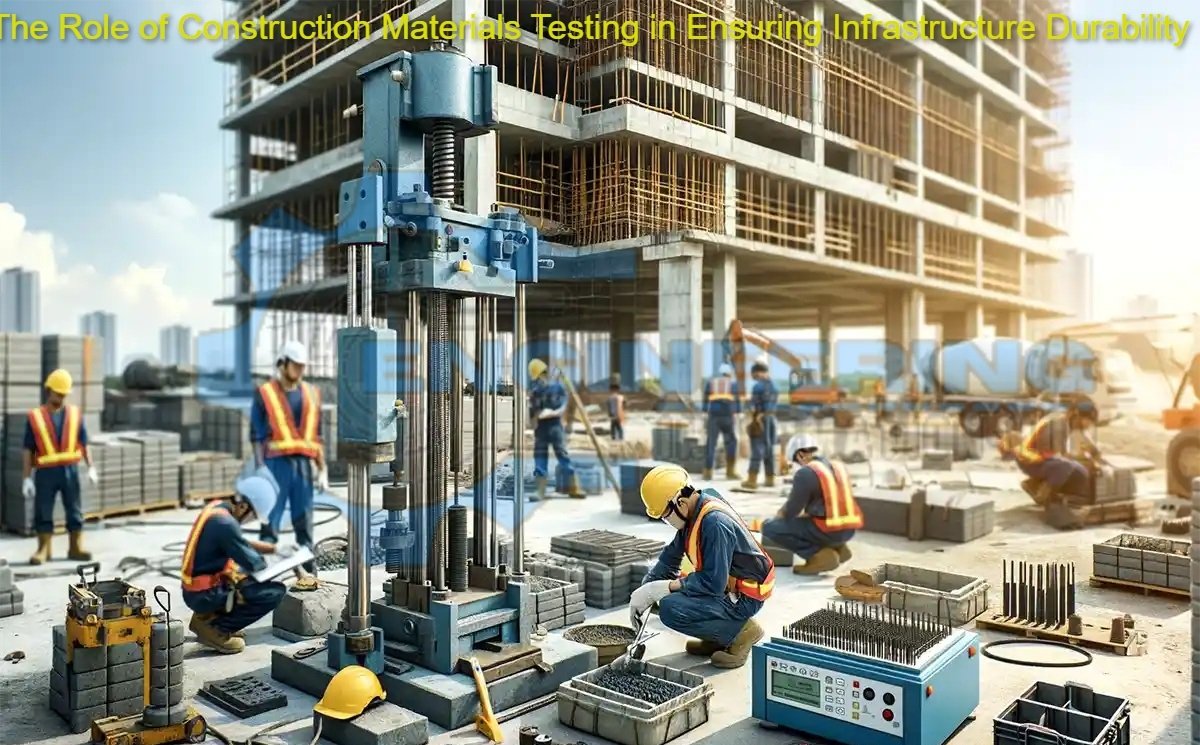
Construction materials testing refers to the evaluation of materials such as soil, concrete, asphalt, aggregates, and steel to determine their physical and mechanical properties. These tests are conducted in laboratories or on-site to verify that materials comply with engineering specifications and industry standards.
The primary objective is to ensure that materials used in construction can withstand environmental conditions, loads, and long-term usage without compromising structural integrity.
Importance of Materials Testing in Construction
1. Ensuring Structural Safety
Safety is the most critical factor in any construction project. Materials testing helps identify weaknesses in materials before they are used in construction. For example, testing the compressive strength of concrete ensures that it can support the intended load without failure.
Without proper testing, structures may develop cracks, deformation, or even collapse under stress.
2. Improving Durability and Longevity
Durability is essential for infrastructure projects that are expected to last for decades. Materials testing ensures that materials can resist environmental factors such as:
Moisture and water infiltration
Temperature variations
Chemical exposure
Freeze-thaw cycles
By selecting materials that pass durability tests, engineers can significantly extend the lifespan of structures.
3. Compliance with Standards and Regulations
Construction projects must adhere to national and international standards such as ASTM, AASHTO, and ISO. Materials testing ensures compliance with these standards, which helps in:
Avoiding legal issues
Meeting project specifications
Ensuring quality assurance
Testing provides documented evidence that materials meet required criteria, which is crucial for project approvals and audits.
4. Cost Efficiency and Risk Reduction
While materials testing involves upfront costs, it helps prevent expensive failures in the long run. Identifying substandard materials early reduces:
Repair and maintenance costs
Project delays
Structural failures
In essence, testing acts as a preventive measure that minimizes financial and operational risks.
Types of Materials Testing in Construction
1. Soil Testing
Soil testing is conducted to determine the bearing capacity and stability of the ground before construction begins. It helps engineers design appropriate foundations based on soil characteristics.
2. Concrete Testing
Concrete is one of the most widely used construction materials. Common tests include:
Compressive strength test
Slump test
Air content test
These tests ensure that concrete achieves the desired strength and workability.
3. Asphalt Testing
Used primarily in road construction, asphalt testing evaluates properties such as:
Density
Stability
Bitumen content
This ensures road durability and resistance to traffic loads.
4. Aggregate Testing
Aggregates form a major component of concrete and asphalt. Testing determines their:
Size distribution
Strength
Cleanliness
Proper aggregate quality directly impacts the performance of construction materials.
5. Steel Testing
Steel reinforcement is critical for structural strength. Testing includes:
Tensile strength
Yield strength
Ductility
These properties ensure that steel can handle stress without breaking.
Role of Technology in Modern Materials Testing
Advancements in technology have significantly improved the accuracy and efficiency of materials testing. Modern tools and techniques include:
Automated testing equipment
Non-destructive testing (NDT) methods
Digital data analysis and reporting
These innovations allow engineers to make faster and more informed decisions, improving overall project quality.
Challenges in Materials Testing
Despite its importance, materials testing faces several challenges:
Lack of skilled professionals
Inconsistent testing procedures
Poor quality control in some regions
Limited access to advanced equipment
Addressing these challenges requires proper training, standardized procedures, and investment in modern testing infrastructure.
Future of Construction Materials Testing
The future of materials testing is moving towards greater automation, data integration, and sustainability. Emerging trends include:
AI-driven testing analysis
Smart sensors embedded in materials
Real-time monitoring of structural performance
These advancements will further enhance the reliability and efficiency of construction processes.
Construction materials testing is a fundamental aspect of modern engineering that ensures safety, durability, and compliance in infrastructure projects. By evaluating the quality and performance of materials before and during construction, engineers can prevent failures and optimize project outcomes.
As construction continues to evolve, the role of materials testing will become even more critical in delivering resilient and long-lasting infrastructure.
Author Bio (for backlink)
Ryan Morrioson is a quality engineering professional with over two decades of experience in structured material testing methodologies and validation systems. As the author of Certified Material Testing, he shares insights on quality planning, measurable testing frameworks, and risk-based assurance practices. Ryan is passionate about helping teams apply disciplined quality principles across industries to achieve consistent and reliable outcomes.
READ MORE
How to Become a Construction As Project Manager
Calculate The Formwork For Columns Beam Girder And Slab





Howdy very nice web site!! Guy .. Excellent ..
Wonderful .. I will bookmark your blog and take
the feeds also? I am glad to seek out a lot of useful information right
here within the post, we’d like develop extra strategies on this regard, thank
you for sharing. . . . . .
Incredible points. Outstanding arguments. Keep up the great effort.